Chicken Adobo Recipe
from Filipino Cuisine: Recipes from the Islands by Gerry G. Gelle
The History
Filipino cuisine is a blend of the exotic and familiar. Just as the Filipino people are part Malay, Chinese, and Spanish, so is the cooking of the Philippines. And more recently other cultures have influenced Filipino food. These influences have come from the Americans, Japanese, and Germans.
Spanish additions to the Filipino cuisine predominate. It has been said that about 80 percent of the dishes prepared in the Philippines today can be traced to Spain. The Spaniards introduced tomatoes and garlic along with the technique of sautéing them with onions in olive oil.
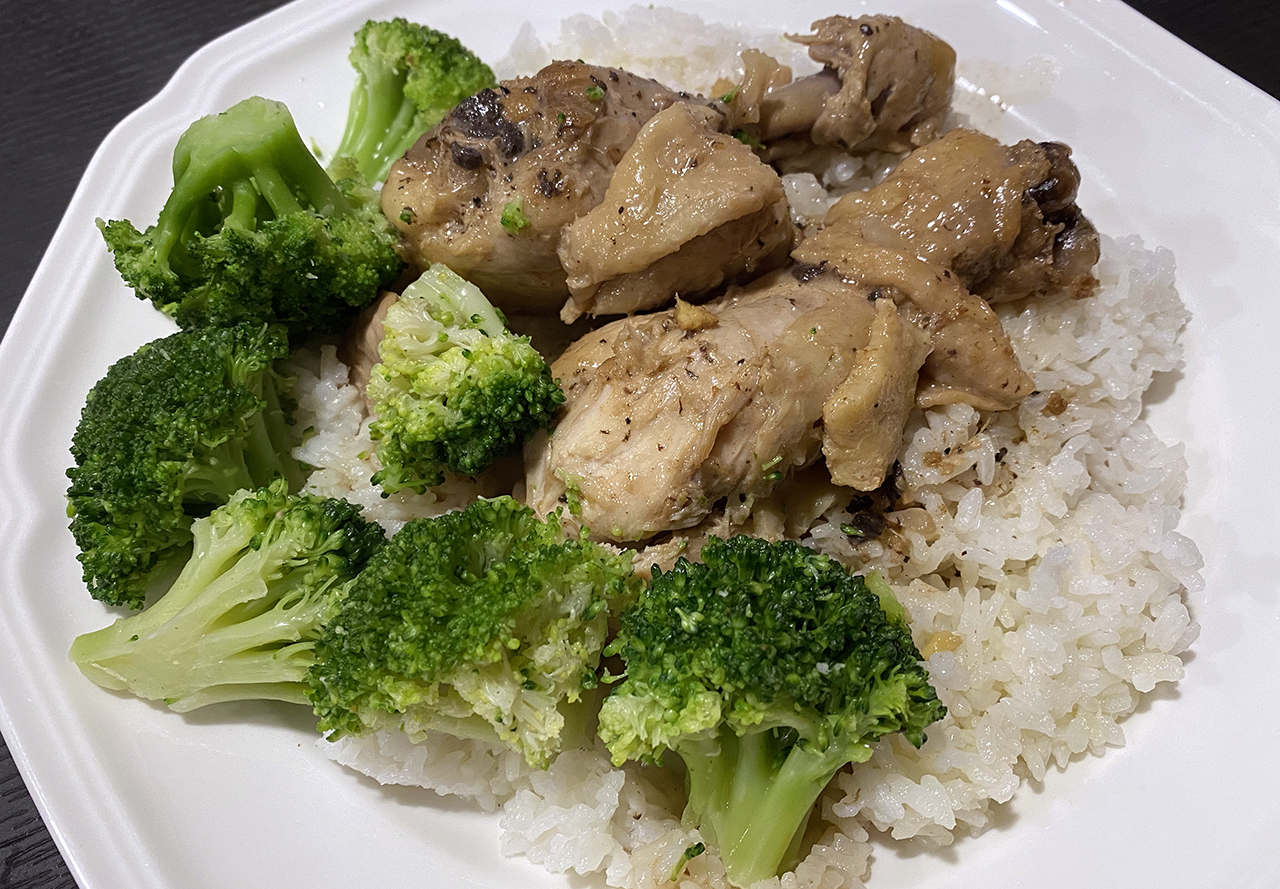
Popularly regarded as the Filipino national dish, adobo is both a specific dish and a method of cooking in which pork, chicken, fish, seafood or vegetables are braised in vinegar with garlic and pepper. The basic recipe is simple and allows for many variarions, limited only to the imagination of the cook and the available ingredients. Pork adobe (adobong baboy) is the basis of most variations.
Although adobo can be made quickly by omitting the marinating, the flavors are more subtle and complex if one takes the time to marinate the fish, meat, or chicken first. When marinating, be sure to use a saucepan that is not aluminum, as the vinegar can discolor it and impart a strange flavor. Adobo is best when made a day or more before serving, allowing the flavors to mix and age. Just before serving, it can be reheated on the stove or in the microwave, and served on a bed of freshly cooked rice.
Leftover adobo is delicious and versatile. It can be mixed with leftover rice, heated and served either for lunch or as a great alternative breakfast dish with eggs. So make some adobo today, and eat it tomorrow. It is well worth the wait!
Ingredients List
- 3 teaspoons vegetable oil
- 1 teaspoon ginger, grated
- 3 gloves garlic, minced
- 2 1/2–3 lbs. chicken, cut up
- 1/2 cup native Philippine vinegar (sukong paombong) or distilled white vinegar
- 1 teaspoon salt
- 1/4 teaspoon black pepper
- 1/2 cup water
- 2 bay leaves
- See Variations for additional optional ingredients
Step-By-Step Instructions
- Heat the oil in a large pot
- Sauté the garlic and ginger
- Add the chicken pieces to the pot and lightly brown
- Add the vinegar, salt, pepper, water and bay leaves
- Simmer, covered, for 30 minutes or until the chicken is tender
- Remove the cover, and continue to simmer until the liquid is reduced by half
- Serve with rice
- Makes 6–8 servings